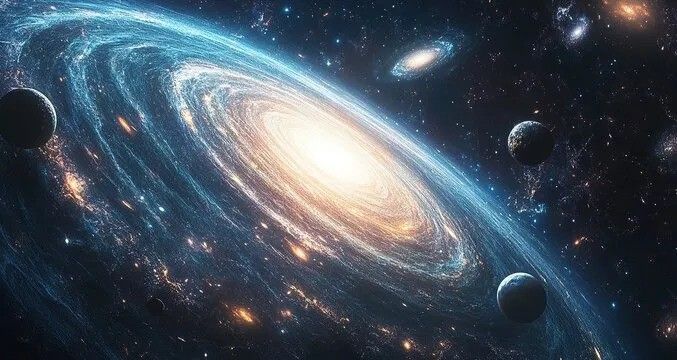
The different types of objects to observe in the sky
You may have seen it if you went through the gallery or the CV, but I really love astronomy and astrophotography (feel free to grab a wallpaper for your phone!).
I'll share some of my work here, a few more general articles on astronomy, maybe some guides.
To help you find your way around what's coming, a quick tour of what's observable is in order.
Uncredited photos are mine.
1. Stars
What we see most in the sky, even in the city under a polluted sky, although you'll be limited to the brightest ones (Arcturus, Vega, Betelgeuse, Altair for example). The further you get from the city, the more the sky fills with tiny white dots, putting on a pretty stunning show.
Single stars
Balls of gas that shine thanks to nuclear reactions in their core. Their colour indicates their temperature: blue = very hot, red = cooler (that's Wien's displacement law). On the biggest ones, you can tell the slight colour differences with the naked eye, under a nice dark sky with dark-adapted eyes.
Double stars
Two stars that look close, either in mutual orbit (visual or non-visual binaries), or just aligned by chance with Earth (optical double)
2. Planets
Second type of objects easiest to observe, even in the city:
- The Moon: not a planet I know, but you can really have fun with a simple pair of binoculars.
- Jupiter: bright, quite a few details visible with a telescope. The moons are visible with a good pair of binoculars.
- Saturn: a bright point, no details visible to the naked eye, you need a telescope to see the rings.
- Mars: a small slightly red point.
- Venus: the famous "evening star". Very bright, easy to spot.
- Mercury: harder to see, often very low.
- Uranus / Neptune: invisible to the naked eye, you'll need a telescope to see them.
- Pluto: forget it, you need serious gear to see it.
With all this talk of bright points, a little tip to tell a star from a planet:
- A star will twinkle a bit, a planet won't (unless conditions are bad, then it can twinkle a little).
- From one night to the next, its position relative to the stars changes.
3. Nebulae
Nebulae, my favourites! But we're entering objects that are hard to see with the naked eye or binoculars, even if M42 (Orion, probably the best known) is easily visible: find Orion's Belt (to the south in winter, 3 very recognisable aligned stars). Starting from the leftmost star (Alnitak), go down a bit and you'll spot 3 small vertical stars: the middle one is actually the Orion Nebula!
What's a nebula? It's a cloud of gas and dust, which gives more or less extended shapes, often very colourful with the right filters!
Diffuse
These are stellar nurseries! It's in these vast regions that stars are born. Diffuse nebulae are regions of gas (mostly hydrogen) and dust. M42 falls into this category.
Diffuse nebulae have 2 sub-categories:
- Reflection nebulae: reflect the light of nearby stars (e.g. M45, the Pleiades)
- Emission nebulae: shine on their own thanks to the newborn stars inside them
Planetary
As the name suggests, this has absolutely nothing to do with planets (a historical name coming from their disk shape, which was therefore taken for a planet). Planetary nebulae are remnants of dying stars that expel their outer envelope, which gives a round or ring shape.
Dark
Dark nebulae are clouds of cold gas and very dense dust that block the light and therefore appear as a dark veil. That makes them fairly tricky objects to photograph with long exposures. One of the best known and most recognisable is the Horsehead Nebula.
4. Star clusters
Star clusters are groupings of stars, which we split into 2 groups.
Open clusters
A more scattered collection of stars (up to 10,000 stars all the same), loosely packed. One of the best known is M45. They're bright and can be visible to the naked eye.
Globular clusters
Unlike open clusters, globular clusters are very dense groupings of old stars (several hundred thousand stars). One of the best known and most visible is the Hercules Cluster (M13)
5. Galaxies
On to the last observable objects: galaxies! Galaxies are collections of stars, planets, gas and dust. With rare exceptions, they're hard to see with the naked eye (M31 under a nice dark sky and M51 with binoculars). Here too, there are several types/shapes.
Spirals
Like turbines or whirlpools, with a bright central nucleus and spiral arms rich in stars and gas, like our neighbour M31.
Ellipticals
Oval and without visible arms, often made of old stars. They look like glowing rugby balls.
Irregulars
No defined shape. Their appearance is often due to collisions or gravitational disturbances. Example: the Magellanic Clouds.
Lenticulars
Between spiral and elliptical: a flattened disk without distinct arms. E.g.: M84, M86, NGC 5866.
Conclusion
That's all for this brief overview of what's above us! Take advantage of winter to feast your eyes — and since it gets dark earlier and earlier, don't hesitate to get the kids outside!
I help teams with this kind of split — short audits or longer engagements.
Let’s talk